
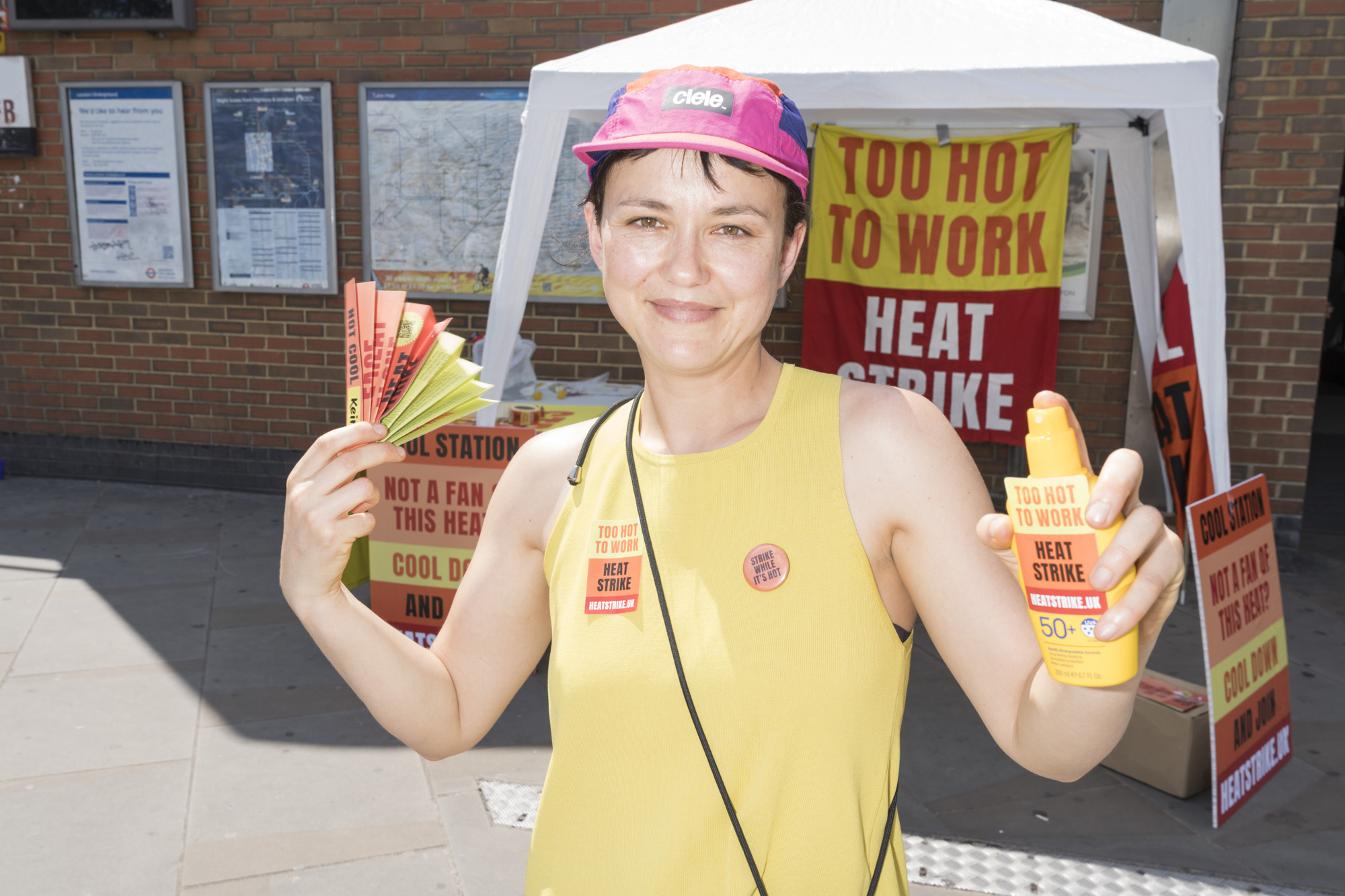
Frieda Lurken, a climate campaigner with a background in public health, explains how firefighters can raise the alarm with the Heat Strike campaign
A quick glance at recent UK headlines and you would assume that politicians are quaking in their boots as summer approaches. Spring in England the UK this year was the driest in a century. We saw the hottest May 1 on record, with temperatures soaring to 29.3°C in Kew Gardens. This dry weather resulted in wildfires increasing by a whopping 483% in South Wales.
These are unmistakable signs that the climate crisis has reached the UK. And yet, the Labour government has inflicted yet another real terms cut to fire service funding.
Firefighters have long called for action to tackle the climate emergency alongside climate campaigners. The EU has seen a 42% increase in heat-related workplace fatalities since 2000. Rising temperatures are a workplace health and safety issue: for firefighters on the frontline of wildfires, and for anyone working in the heat.
The FBU partnered with Heat Strike last year - a coalition of unions, climate organisations, and other campaigning groups. Together, we are calling for a legal maximum work temperature, a heat furlough scheme, and much more ambitious climate measures.
The plan is simple but impactful: when temperatures hit 36°C, we will call on people to go on Heat Strike. If you are a non-emergency worker, that could mean using your right under Section 44 not to work when it is unsafe. If you will be busy putting out fires, you can join the action by posting about your experiences on social media using #HeatStrike and #TooHotToWork.
If politicians do not respond to the urgency of the situation, we will take matters into our own hands. When heatwaves strike, we strike back.
Find out more about the Heat Strike week of action 14-20 July, and sign up to get the 36°C signal at heatstrike.uk
