
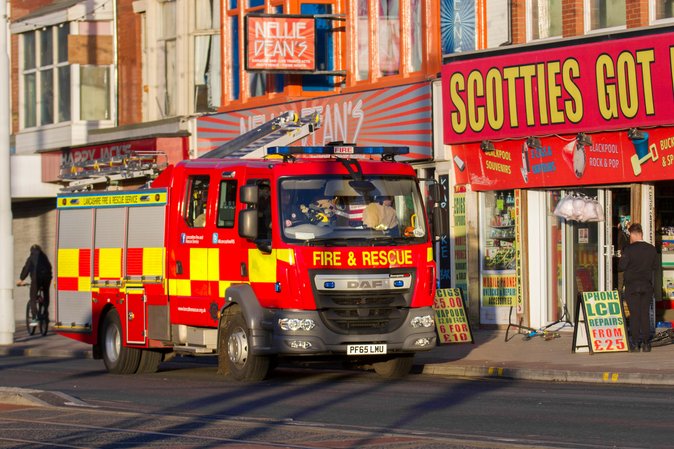
Blackpool’s firefighters battle to keep people safe in a seaside town that has come to symbolise “left behind Britain”, hit hard by austerity. Helen Hague reports on life on the frontline – and hope for the future.
Blackpool – home to the union’s conference in May - boomed as a seaside town in the nineteenth century and flourished in the twentieth - before Brits started swapping weeks at the seaside for package deals on the Costas in the late-sixties.
Many millions still come each year. There’s a spruced-up prom and a conference centre in the Winter Gardens. Strictly Come Dancing, staged from the ballroom at the bottom of Blackpool Tower brings in fans entranced by it on TV. And Blackpool is still a top destination for Hen and Stag nights.
But in recent years austerity has taken its toll – with the town scoring high in the kind of league tables no-one wants to top – from lung cancer to drug deaths, heart disease to gambling addiction.
Between 2010 and 2024, central government funding for Blackpool Council was cut by £218 million, while job losses and the high cost of living have increased the need for services.
Blackpool now has the lowest male life expectancy in Britain, at 73, six years below the national average. And nearly four times the national average of its children are in care.
Just a few streets back from the prom, many former hotels and guest houses have become overcrowded houses in multiple occupation - many in bad repair or derelict. This presents a challenge for the town’s firefighters. When people struggling to find secure housing are forced into these empty buildings, fires become a very real risk: a result of the crisis driven by the poorly regulated private rental sector and council housing being sold off. “Grows” – cannabis farms – hidden behind decaying walls, pose an ever -present fire threat.
Hardly surprisingly, Blackpool’s main fire station is the third busiest in Lancashire: – serving a busy seaside town with high levels of deprivation close to a busy motorway. Just 500 yards behind the Pleasure Beach there is South Shore – a one-pump station where frontline firefighter Gary Fernandez is based. Gary, who is assistant brigade secretary of the Lancashire FBU, relishes his job but says it has become “a lot more stressful” since crews were slashed from five to four last year.
Before he joined the fire service six years ago, Gary was a mental health manager – helping people who had been sectioned under the Mental Health Act get back into the community. It’s a skill he has drawn on as a Blackpool firefighter -, as supporting people with mental health challenges has become part of the job. Crews encounter people who are “suicidal or crying out for help” – and can be called out to wards if patients “get hold of a lighter” or are saying they “want to burn down the bathroom”.
Gary recalls a callout to a derelict house, just a few streets back from the prom, which typifies challenges firefighters face on such jobs. “We were walking the plank – there were so many gaps in floors and walls. Then there’s the broken windows, the dead pigeons and rats”.
Both the town’s MPs are now Labour, and Labour controls Blackpool council – but Reform swept to power in the Lancashire County Council elections in May. There are now two Reform councillors in Blackpool – one elected and one defected from the Tories. And the town has the first ever Reform UK branded pub in Britain - which was a Conservative club for nearly 100 years.
Across the UK, Reform is surging in the polls, making inroads in areas of high deprivation.
But what Gary would like to see is wealth redistributed across our deeply unequal society. Between 2020 and 2022 alone, billionaire the wealth of UK billionaires increased by almost £150bn, while 30% of children now live in poverty in towns like Blackpool. He says a socialist alternative is needed, “to give working class people the policies and hope they deserve.”
And he knows that tourists are unlikely to seek out boarded up derelict buildings on nearby backstreets. They come for the prom, the bars, the arcades and the entertainment. And so does he when not on shift - often bringing his young family to enjoy what Blackpool has to offer.
Blackpool Council has owned the iconic Tower for fifteen years. But, from August it will also be running it, through its in-house tourism firm: – safeguarding the heritage site, and boosting the local economy. It will also manage other popular tourist sites.
“Amazing news”, says Gary ” hopefully this means money generated can be put back into the town – making Blackpool stronger.” And help ensure that even when times are tight, the tourists keep on coming…
