
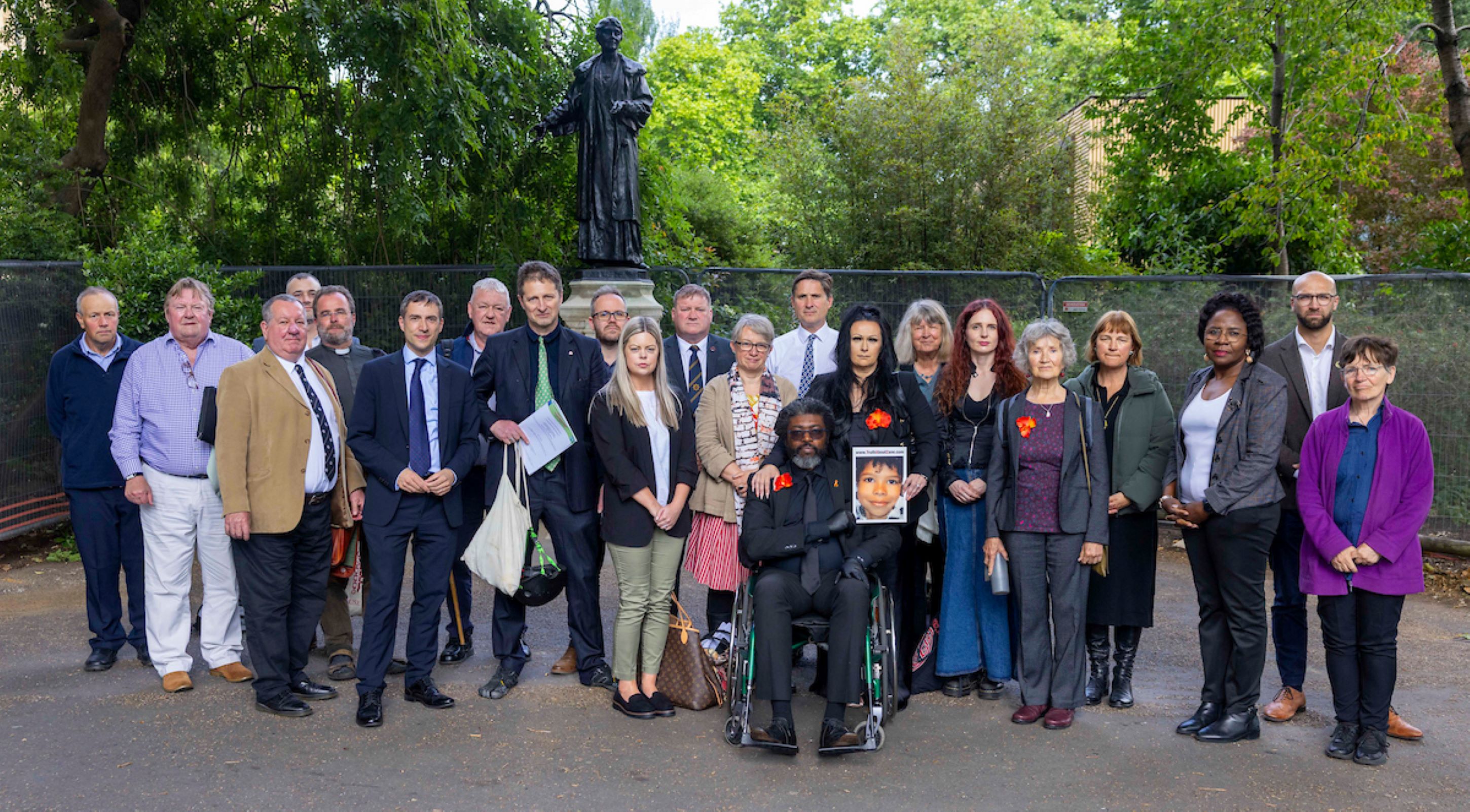
Campaigners calling for ‘Zane’s Law’, to protect communities from contaminated land, held a summit at the Houses of Parliament this June.
The proposed law would improve transparency around historic landfill sites and clarify who is responsible for making these safe. It is named after seven-year-old Zane Gbangbola, who died on 8 February 2014 when floodwater passed through landfill into the basement of his family’s home in Chertsey. His father, Kye Gbangbola, was left paralysed by the same incident.
Surrey Fire and Rescue Services detected high levels of hydrogen cyanide in the home. The landfill site has still not been properly tested, despite the discovery of a 2010 report warning of an “unacceptable risk” of migrating landfill gasses from the site causing “significant harm, serious injury and capable of causing death”.
Campaigners from more than twenty communities experiencing severe and sometimes fatal harms from toxic landfill and contaminated water spoke at the event, supported by the FBU and Natalie Bennett, member of the House of Lords.
Speakers also included Des Collins, the solicitor who represented families affected by the toxic waste scandal in Corby, as dramatised in the recent Netflix series Toxic Town.
Zane’s parents, Kye and Nicole Gbangbola, continue to call for government action: saying that “Britain should be leading the way in environmental law. Instead our legislation is woefully inadequate.”
