
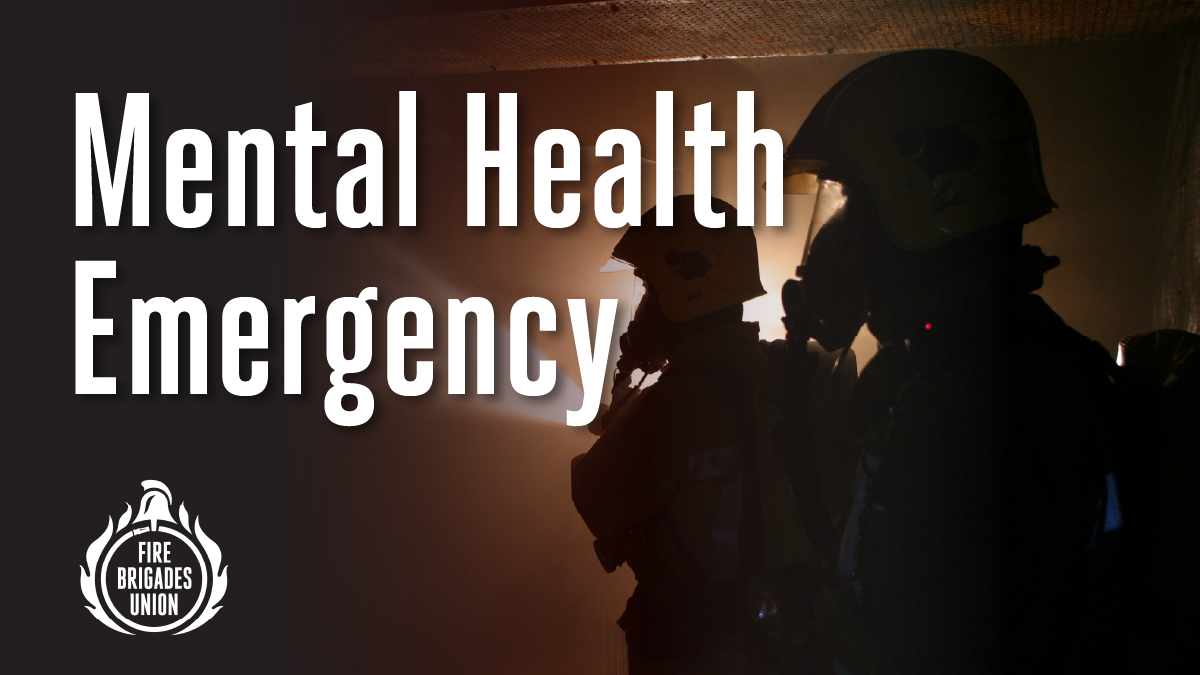
There is a mental health emergency in the UK fire and rescue service.
A 2019 study by Mind, the mental health charity, found that 60% of fire service workers who took part reported having personal experience of mental health problems.
Despite evidence that vast number of fire service employees are struggling with their mental wellbeing, there has been little drive by leaders to fully investigate and address the problem.
It’s time to talk about mental health, root out the causes, and secure the support firefighters and fire control staff need.
What we're doing
The Fire Brigades Union has commissioned the University of Central Lancashire to undertake one of the biggest research projects of its kind into mental health in the UK fire and rescue service.
So far, we have surveyed fire and rescue services from across the UK on the mental health support available to their employees.
The next step is a massive survey of all firefighters, fire control and Green Book staff about their personal experiences.
What you can do
We need a minimum of 10,000 currently serving firefighters, fire control and Green Book staff to complete the survey.
It is only with this information that we can tackle the causes of poor mental health and advocate for better support.
Fill out the survey and be a part of raising the standards and improving mental health in the fire service.
The survey is now closed.
The survey is available online.
There is the option to save your answers at any time and return to finish the survey later. You will be asked for your email address and reminder emails will be sent about the study.
All currently serving firefighters, fire control and Green Book staff can take part. Retired and out of trade members are not invited to take part in the study at this moment in time.
This is because we are looking at the existing situation in the service and current policies and procedures which impact firefighter mental health, which may have changed since an employee left the service.
The survey will close at the end of June.
Only academics at the University of Central Lancashire will be able to see survey responses.
