
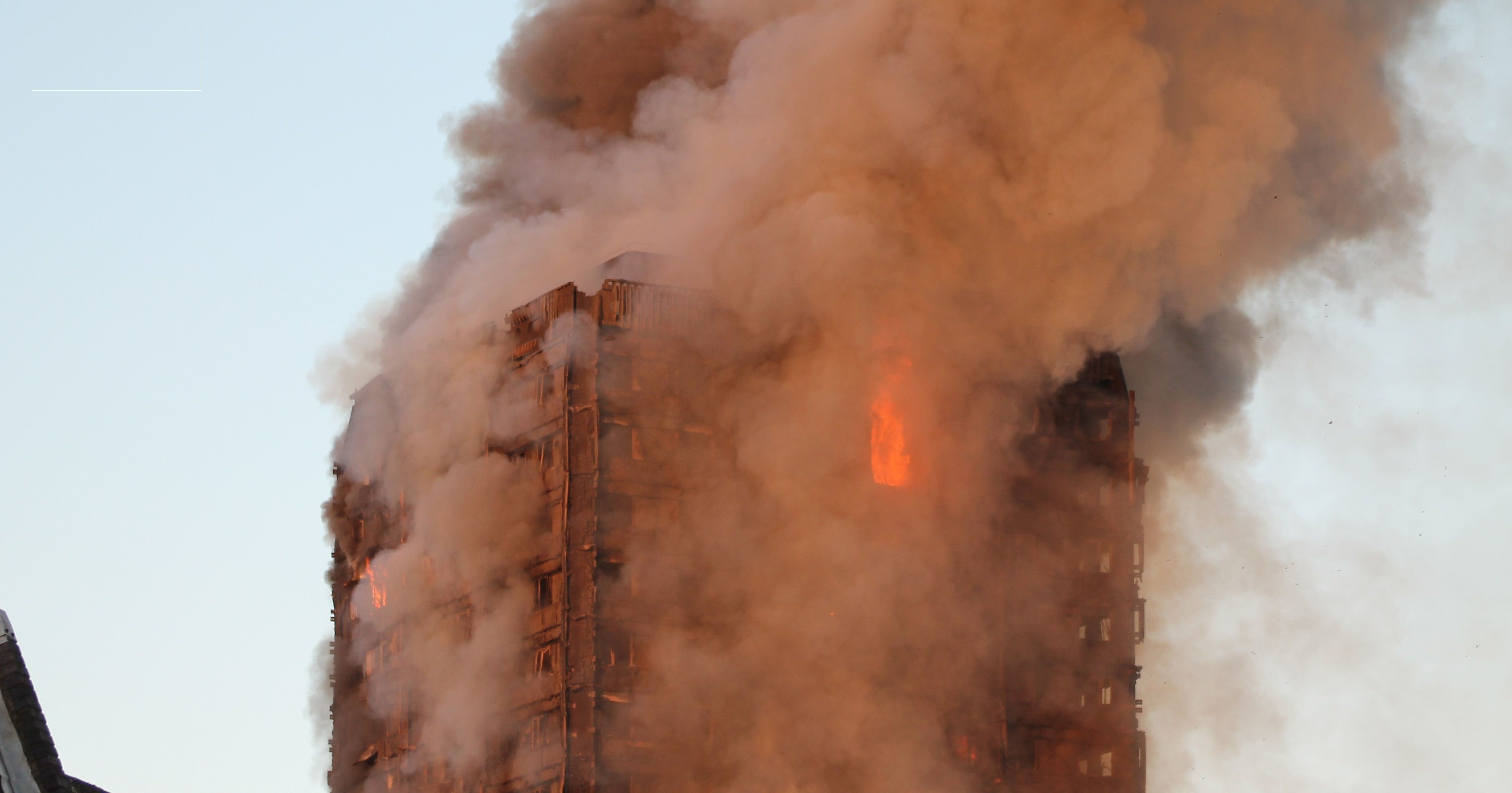
- New research has found that 136 firefighters who were exposed to toxic smoke at Grenfell are now suffering from long term health disorders
- 1 in 4 Grenfell firefighters surveyed have reported life changing health effects since, including 66 cases of digestive diseases, 64 respiratory diseases, 22 neurological diseases and 11 cancers
- The Fire Brigades Union says health monitoring is needed to save lives
New research has found that over a quarter of surveyed firefighters who attended the Grenfell Tower fire are now suffering from long-term health disorders.
The research, independently carried out by the University of Central Lancashire with assistance from the Fire Brigades Union, analysed available data from 524 of the 628 firefighters who attended the disaster.
As published in the Journal of Environmental and Occupational Medicine today, 26% of the firefighters reported adverse health outcomes, with 301 adverse outcomes reported overall. In many cases, firefighters suffered from more than one health disorder. These include 66 cases of digestive diseases, 64 respiratory diseases, 22 neurological diseases, and 11 cancer diagnoses.
Authored by Professor Anna Stec, a world-leading expert in fire chemistry and toxicity, the study found that a majority of the 136 firefighters reporting health disorders had not worn respiratory protection at some point during their activities. They were unable to follow safety protocols due to the severity of the incident.
Firefighters were exposed to smoke with gases and particulate matter at a far higher levels than the limit set by the Health and Safety Executive, with many experiencing immediate symptoms including choking, difficulty breathing and vomiting on the night. Over three times as many firefighters who were exposed to smoke during the incident reported digestive and respiratory diseases in the three years following, compared to those who were not exposed.
Scientists warn that the full health impact of the Grenfell Tower fire is still unknown, with many cancers and diseases taking years more to develop.
Firefighters who attended Grenfell report similar health symptoms to the firefighters who responded to the collapse of the World Trade Centre. Following 9/11, a life-long health monitoring programme was set up for emergency responders and the local community, which has enabled early diagnosis and treatment of cancers and other diseases, saving lives.
However, no established regular health monitoring program has been implemented for cancers and other diseases among the firefighters and residents affected by the Grenfell Tower fire.
Matt Wrack, Fire Brigades Union general secretary said:
As ever, our thoughts are with the bereaved, survivors and residents of the Grenfell Tower fire. On that tragic night, firefighters went above and beyond to save lives from an inferno that should never have happened. This new research shows that many of the firefighters who risked their own lives are now suffering serious health effects.
We now have powerful evidence that firefighters were exposed to extreme levels of toxic smoke at the tower, many without any respiratory protection. The figures are stark, with 136 of those attending in the first 20 hours now living with one or more diseases associated with smoke exposure.
We must learn from the aftermath of 9/11, which made it clear that enhanced health testing is vital to protecting the lives of firefighters and residents. Regular health monitoring must be rolled out across the fire and rescue service to ensure that diseases can be treated in their early stages.”
Professor Anna Stec, Professor in Fire Chemistry and Toxicity at the University of Central Lancashire said:
Our latest research finds that firefighters who worked inside the Grenfell Tower fire report significantly higher rates of gastrointestinal, respiratory, neurological, and other diseases compared to those who worked outside the building.
We know that firefighters are exposed to toxic contaminants in fire throughout their careers, and that preventative measures are needed to protect their health. Although it is not possible to definitively trace any disease back to a single incident, it is alarming that a high proportion of the firefighters who were exposed to very high smoke levels that night are now falling ill.
Given that firefighting is classified as a carcinogenic occupation by the World Health Organisation and is associated with higher mortalities from rare cancers, introducing regular health monitoring for UK firefighters is essential.”
The research has been published today in two papers in the Journal of Environmental and Occupational Medicine:
- Toxic Effluents and Assessment of Firefighters’ Health Impacts: Journal of Occupational and Environmental Medicine
- Firefighters' Activities and Their Exposure to Fire Smoke and Heat: Journal of Occupational and Environmental Medicine
Authored by Anna A. Stec*, David A. Purser and T Richard Hull
