
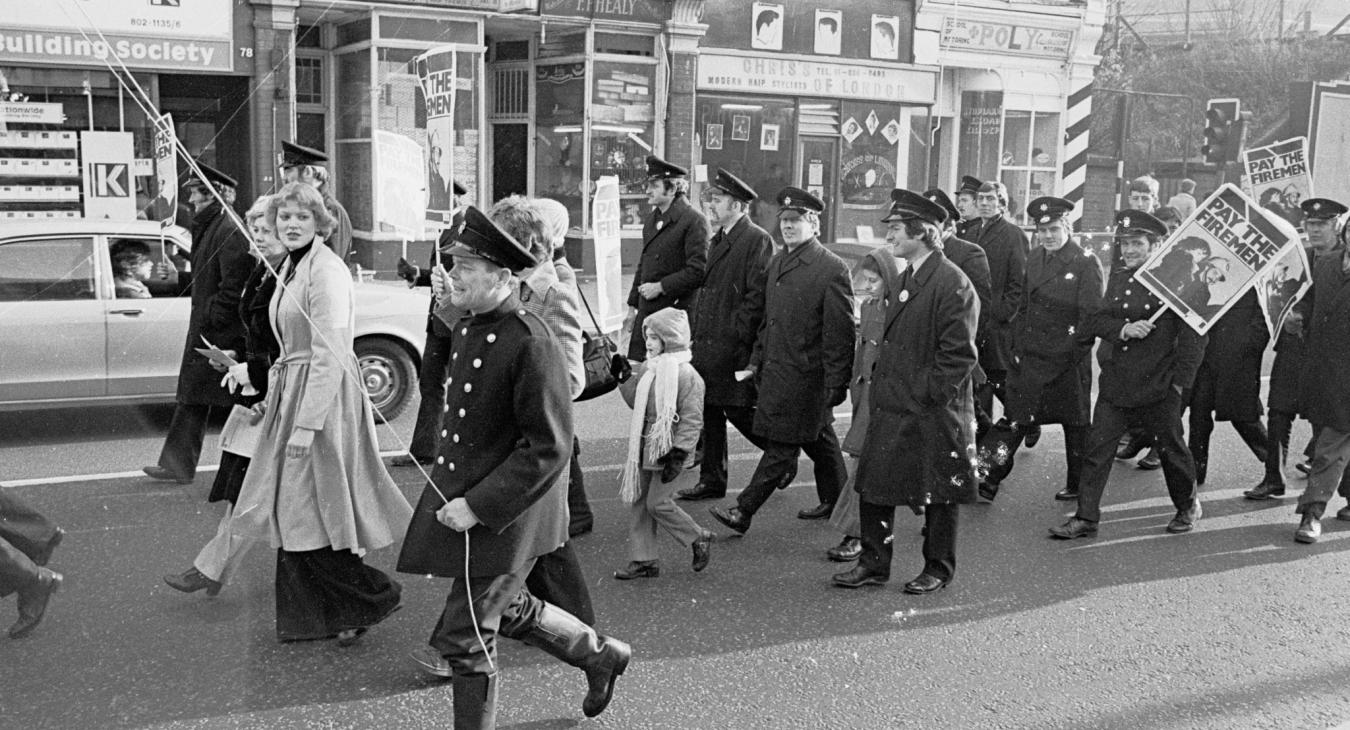
The first national FBU strike in 1977 established a pay system that was to last decades. Helen Hague explains how and why.
Forty years ago, firefighters across the UK began their first national strike as anger over low pay bubbled up from the grassroots. The Labour government never really believed it would happen.
But it did. And for nine weeks, in deep midwinter, striking firefighters huddled round braziers outside fire stations – putting the case for a decent wage rise, driven by need not greed.
The seventies was an extraordinary time. Relentless inflation ripped through the decade, reducing workers’ spending power. It rose by nearly 16 per cent during 1977, having reached more than 24 per cent two years earlier. These were far from the “feel-good” times of the 60s.
In the Queen’s jubilee year, the BBC banned the Sex Pistol’s punk anthem God Save the Queen to stop it topping the charts. Its sneery rebelliousness and disenchantment with authority both captured and helped shape the mood.
Meanwhile the Labour government was trying to keep the lid on public spending through its incomes policy. The first two stages had already reduced firefighters’ earnings to three quarters of average pay, leaving many parents reliant on state benefits to make ends meet.
Now it was time for the third stage – capping wage rises at 10 per cent. It promised little for cash-strapped firefighters and their families – not with annual inflation pushing 16 per cent. At annual conference the mood was for a real increase in pay – one that outstripped inflation.
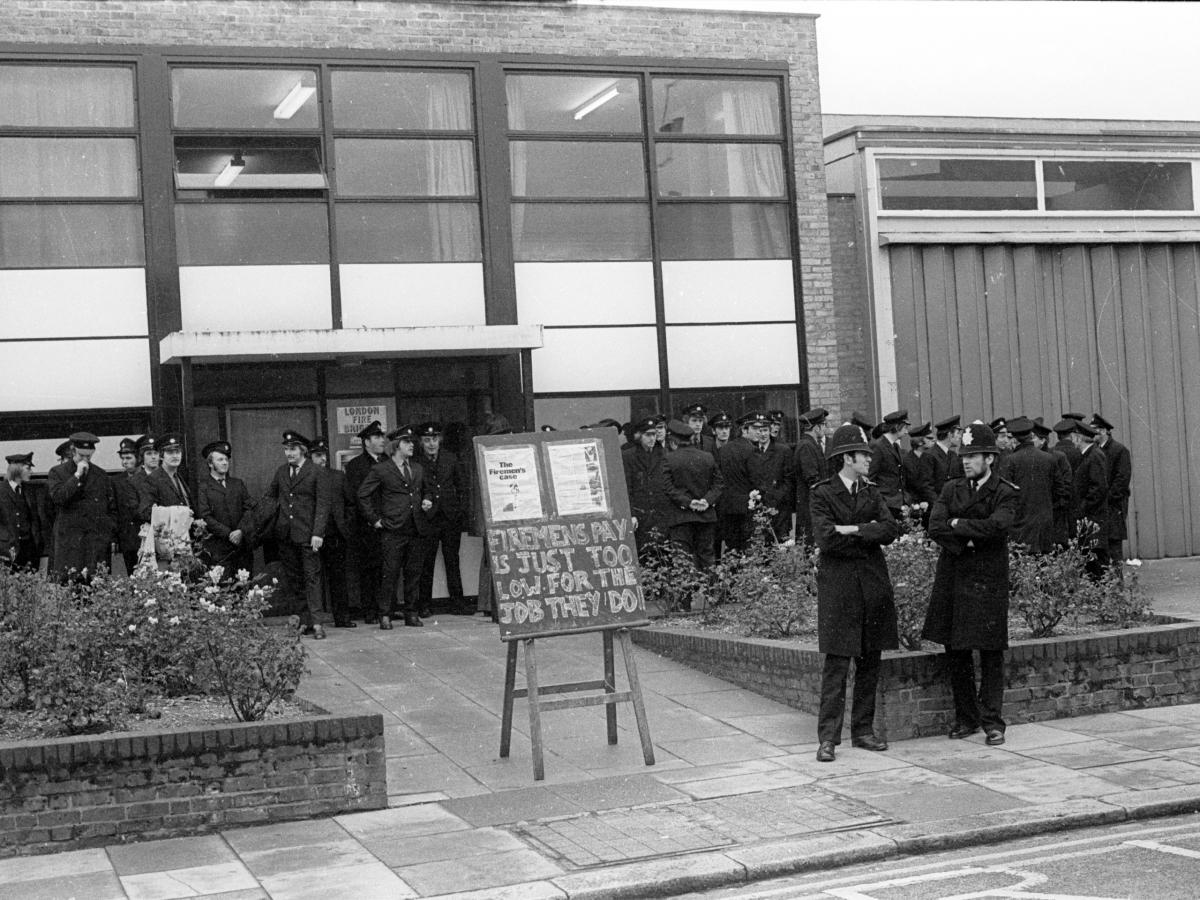
During the summer there were calls for the FBU to ballot for strike action from brigades including Strathclyde and Merseyside, putting pressure on the union’s executive.
A claim for a 30 per cent rise, bringing parity with average pay for workers, plus an extra ten per cent for the hazards firefighters faced, was lodged in September 1977.
Employers offered an immediate 10 per cent rise – in line with the Government’s pay cap. But rank and file delegates had had enough.
At a recall conference in November they voted by two to one to start striking over pay the following week.
Graham Tranquada joined the fire service in Bedford three years before the strike. Like many keen recruits, he was prepared to take a pay cut from his previous job – hod-carrying on building sites was better paid than firefighting.
NINE WEEKS
“Nobody expected the strike to last nine weeks. We thought it would last a week and there’d be talks,” says Graham, FBU delegate to the Bedford trades council during the strike.
It was his job to put the strikers’ case to other unions. But with mobile phones yet to appear and no phone at home, he spent a lot of time “pumping two pence pieces” into public phones to fix up meetings. Most branches “thought we had a very good case,” says Graham.
Despite an onslaught from the press when firefighters came out on strike, many people agreed they were justified. Two weeks in, a survey published in the Daily Mail found 63 per cent of those questioned thought firefighters should get more. And even rising Tory MP Margaret Thatcher conceded “firemen” should be paid “a bit more” in a radio interview.
On the first day of the strike, Olly Holford from Battersea station “thought it would all be over by lunchtime”. But, “the longer we were out, the more mresolute we became”. A local chippy gave ten free fish suppers each night.
By mid-December the government had offered 10 per cent phased over two years and, crucially, a pay formula which tied firefighters’ pay to “the adult male manual upper quartile”.
Many rank and file firefighters wanted to carry on striking and hundreds lobbied the TUC headquarters just before Christmas calling for TUC leaders to campaign against the 10 per cent cap. They didn’t.
Within weeks, delegates would vote by two to one to call off the strike. There was little jubilation.
Veteran Glasgow activist Ronnie Robertson, among those lobbying the TUC for support before Christmas, ran into trouble with the union’s leadership for distributing unofficial leaflets in the run-up to the ’77 strike. He was prepared to stick it out.
“In my heart I wanted the strike to go on longer. In my mind I knew people had had enough. We were getting starved back to work,” he says.
But the pay formula now in place would deliver decent wages for more than two decades.
And with the “Winter of Discontent” and 18 years of Tory rule on the horizon, it was no bad thing to have in the bag.
The pay formula is long gone. Public sector pay caps from a Tory government have been back in vogue for years. A pay formula delivering real rises year on year sounds oddly tantalising.
Or is that just misplaced nostalgia for the Decade that Taste Forgot?
