
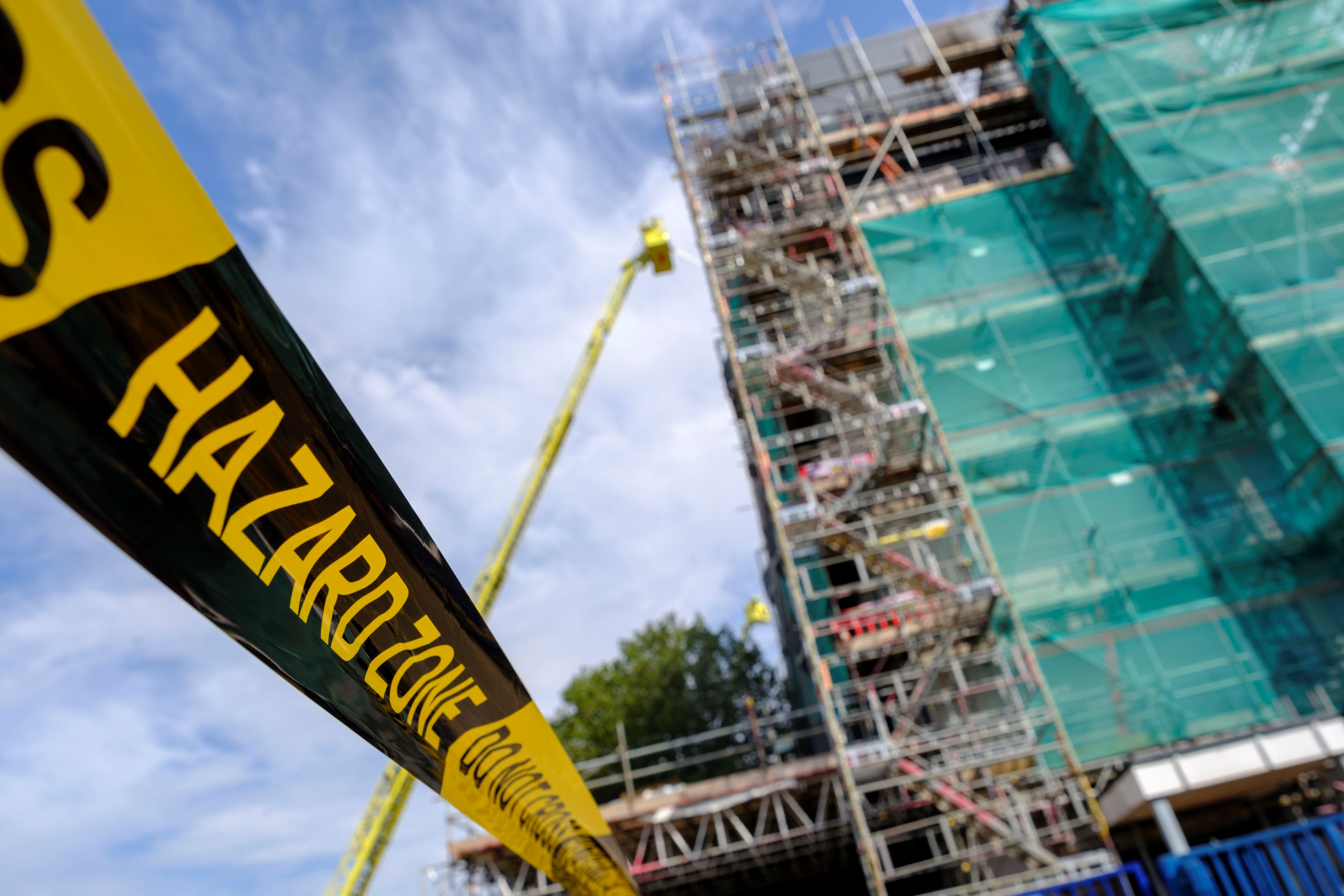
A new report into the cladding crisis has confirmed worst fears about the number of buildings which still have unsafe cladding seven years on from the Grenfell Tower fire.
An investigation by the National Audit Office found an estimated total of 9,000-12,000 buildings of 11 metres or higher with dangerous cladding still require remediation. By August 2024, only 4,771 of these had been identified for remediation, and only 1,392 completed works.
Of 514 buildings with the same or similar aluminium composite material (ACM) cladding as used on the Grenfell Tower, 471 have had it removed.
The investigation report highlights the thousands of residents who are living in fear of a fire, many of whom are also facing costly
remediation bills without support. It also reveals that the government does not know how many buildings below 11 metres have dangerous cladding. It is estimated that up to 60% of unsafe buildings have yet to be identified.
It concludes that the pace of remediation has been much slower than the previous government had expected it to be, and that putting the onus on developers to pay should help protect taxpayers’ money.
However, there needs to be more enforcement to ensure that the industry does not stall in disputes around costs.
End Our Cladding Scandal, a campaign led by impacted residents, called for the government to stop the “merry-go-round of buck passing”.
As MPs debated Phase 2 of the Grenfell Tower Inquiry in December, the Labour party published its remediation acceleration plan (RAP), as promised in its election manifesto.
Under the plan, all buildings of 18 metres and above must have been remediated by 2029. There is no target for buildings of 11 metres and higher, except that the government aims to publish a plan for these
in 2029.
We are still examining Labour’s plan to resolve the cladding crisis, and they have only been in power for five months. But it is an utter disgrace that many millions of people are on course to be left living
in unsafe buildings for 12 years after the Grenfell Tower fire,” said FBU general
secretary Matt Wrack.We urge the government to speed this process up.
The building safety crisis must be addressed urgently, with accelerated action on
cladding, investment in local government and the fire and rescue service, and an end to the privatisation of building control.”
