
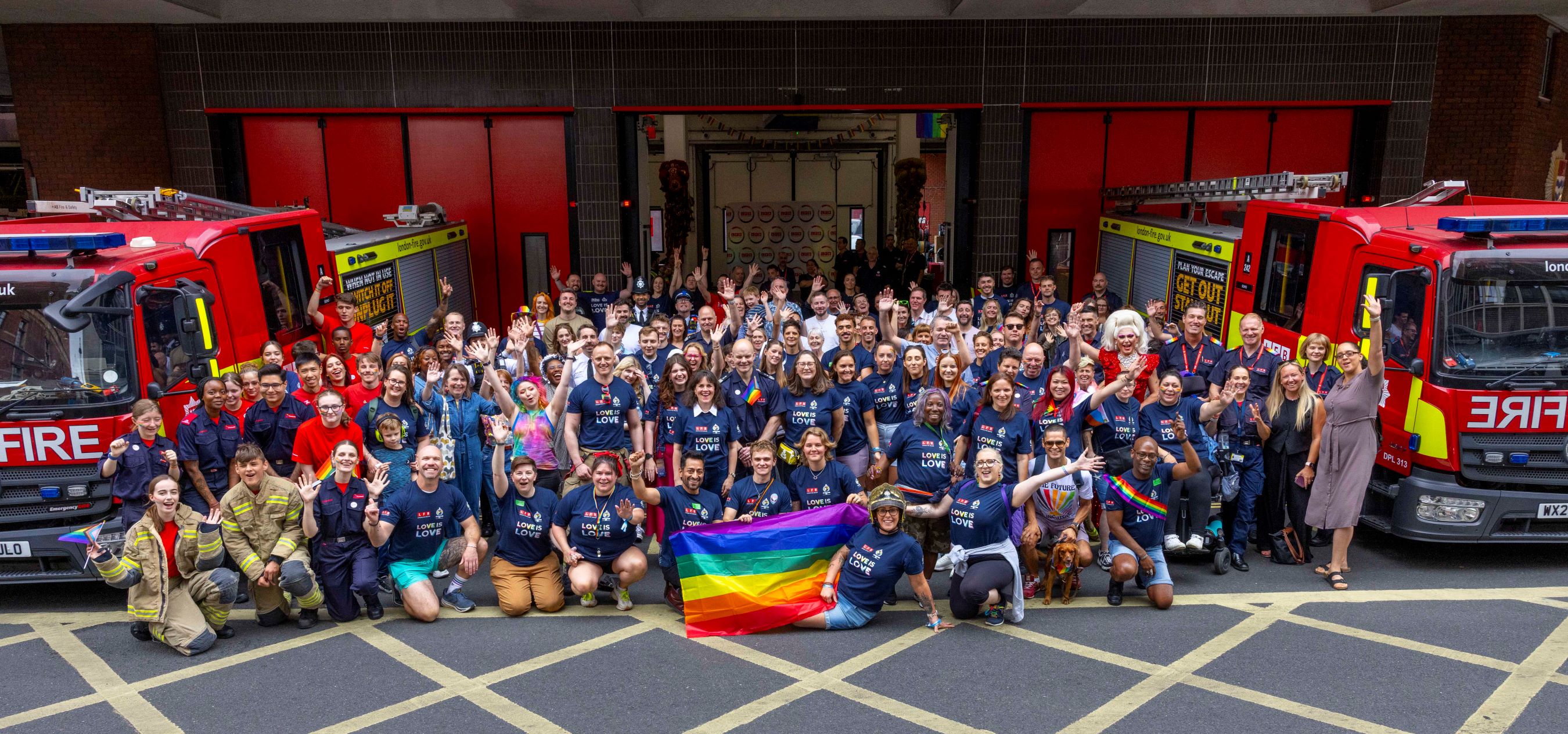
The FBU’s LGBT+ section stands in full solidarity with our trans and non-binary siblings, writes interim LGBT+ national sectional secretary Maria Buck
Earlier this year, Supreme Court judges ruled that women and men are defined in equalities law by biological sex recorded at birth. While this has been presented as clarifying legal protections, in practice it is confusing, impractical, and dangerous.
The Equality and Human Rights Commission has subsequently issued interim guidance on single sex spaces, which may be interpreted in ways that allow for exclusion of trans people from public spaces or workplace facilities. This guidance has spread anxiety, with trans people fearing being outed or challenged when accessing basic facilities. This is a question of dignity — no one should feel humiliated at work.
The Good Law Project is challenging this in the courts, arguing that this guidance is “violating people’s right to privacy in their everyday lives” and failing to uphold human rights.
These definitions risk policing women’s bodies and freedom of expression, rather than protecting them. Suggesting that we can define who belongs in a space based on their appearance or assumptions about their gender is unworkable. No-one should be asked to prove the sex on their birth certificate to use a bathroom.
You may well know or work with someone who has transitioned, who is likely to be feeling anxious about how they could be treated. Trans and non-binary people already face significant barriers to feeling safe at work; according to Stonewall, 51% of trans people have hidden their identity at work for fear of discrimination.
This is a workplace issue impacting our members, so the LGBT+ section brought forward an emergency resolution, “No LGB without the T”, to FBU conference this year. It passed, with support from the National Women’s Committee, B&EMM, and the union’s executive council.
We also held an event at conference, attended by reps from across the union, including the general secretary and assistant general secretary, sending a clear message that ours is a movement of inclusion.
This resolution reaffirmed that trans rights and women's rights are not in opposition. The fight for equality must be rooted in solidarity and unity, ensuring that all women are protected and empowered.
Our section proudly marched alongside 100,000 people at trans pride in London this summer – the biggest turnout in the event’s history – and members attended pride events across the UK. Pride is more than a celebration: it’s a commitment to visibility, solidarity, and action.
Trade union solidarity is about showing up every day, challenging discrimination, and standing with those who need us most. Safeguarding trans people’s rights and dignity will only strengthen the wider movement for justice and equity.
