
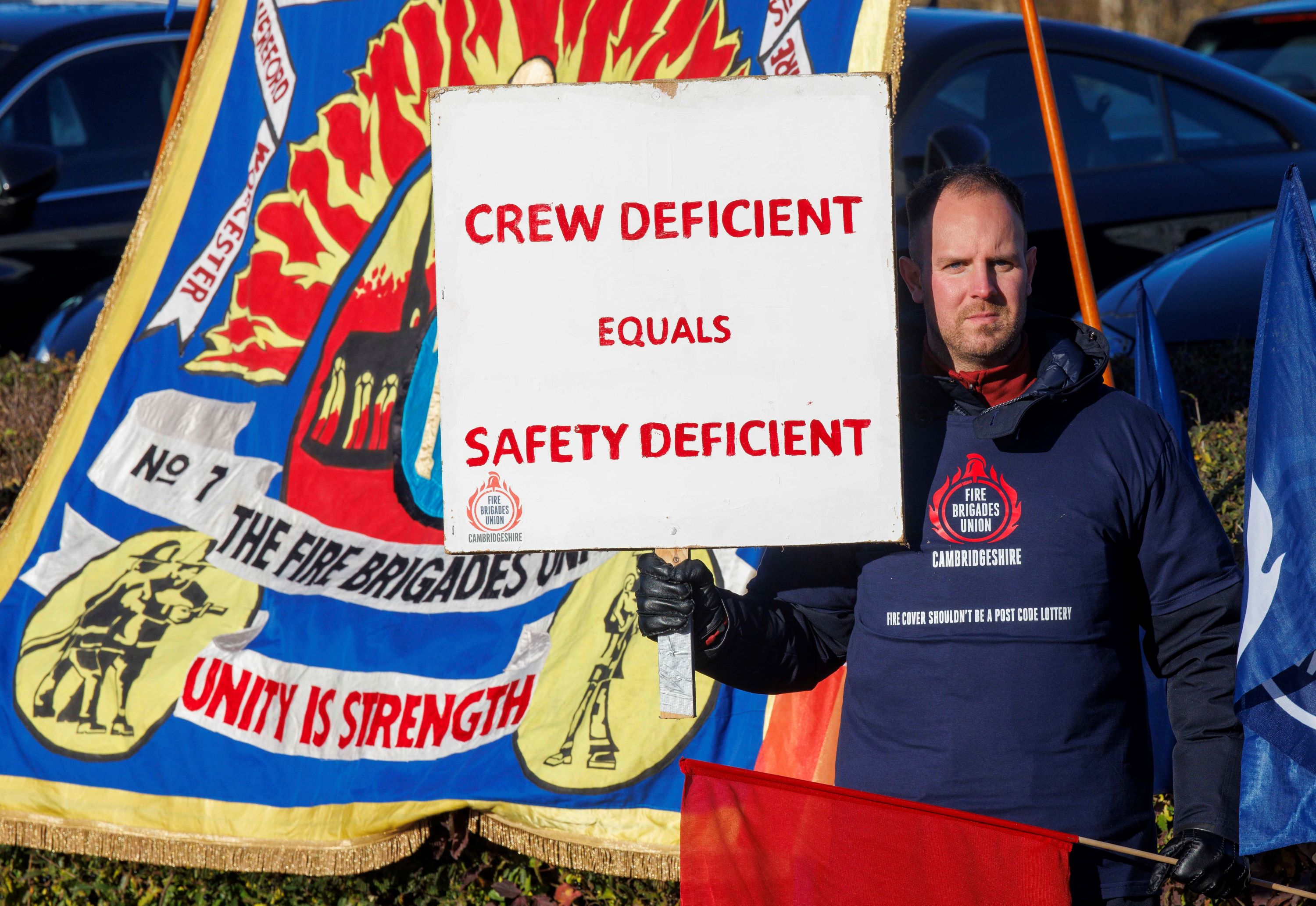
When fire and rescue services send firefighters out in crews of just three on a fire engine, lives are on the line. Firefighter reports.
A hotel is burning. People are still inside and need help to get out. Many of them don’t speak English as their first language and are panicking.
Your crew is first on the scene, but there are only three of you on the fire engine. You aren’t able to follow standard procedures because you don’t have the number of firefighters needed to safely operate breathing apparatus and enter the building.
You don’t know when the next fire engine will arrive. You stand outside and the three of you look up at the smoke, knowing that the hotel could turn into a death trap at any moment.
What would you do?
LIVES ON THE LINE
No firefighter should ever have to face this nightmare. But in Staffordshire, three firefighters found themselves in this exact situation.
This happened during the early days of a trial Staffordshire Fire and Rescue Service launched in June 2023, joining an increasing number of fire services sending retained firefighters out in ‘crews of three’.
Fortunately, another fire engine arrived at the incident a few minutes later – saving the crew from a terrible dilemma. No lives were lost. But this was not an isolated incident, and although the service stated that firefighters in reduced crews wouldn’t be sent to building fires, they still can and do end up there.
BAD LUCK COMES IN THREES
Firefighters in this position face a terrible choice: stand outside or enter the burning building, despite operational policy and training.
June 2023, Cambridgeshire: a crew of three is sent to a fire in a residential flat. It wasn’t known whether anyone was inside, and smoke was billowing from the window. The crew followed the procedure outlined by the service, preparing a water supply and standing by for firefighters equipped with breathing apparatus. They had to wait for an agonising nine minutes before the next appliance arrived from a neighbouring county, aware that every second counted.
But when crews know for certain that someone is in the building, they are likely to put their lives at risk and go in.
In the autumn last year, a crew of three Staffordshire firefighters was sent to a house fire – despite the service assuring that they wouldn’t be – with reports of a person still inside. They arrived to find police attempting to break down the door, so they intervened, gained entry and rescued the resident. Without proper breathing apparatus procedures, they were lucky to have escaped without injury or worse.
If a fire service is run on the basis of luck, it is only a matter of time before avoidable injuries or deaths occur.
JUSTIFYING CUTS
Reducing the size of fire crews enables fire chiefs to make cuts to resources while “fudging the numbers”, says Martin Starkey, Staffordshire FBU brigade secretary, who is fighting the policy alongside members in his region.
“Lowering standards so that a smaller crew is allowed to be deployed means that more fire engines appear to be ‘available’. But behind these inflated figures, the reality is that there are fewer firefighters available to save lives”, he explains.
Response times also appear to improve, while the time it takes to adequately respond gets worse. A crew of three may be able to arrive at an incident first, decreasing the average time recorded for the first fire engine to arrive at an incident. But this time doesn’t reflect when firefighters can start responding to a serious fire, because they must wait for back-up.
UNITE TO FIGHT
While retained firefighters are being sent out in crews of three more often, this is a threat to all firefighters. In the last two decades, the fire service has moved from the safe, professional standard of five per engine to a situation in which four, or even three, has become normalised.
In Merseyside last year, FBU members had to fend off plans to send out wholetime firefighters in crews of three. With a huge rally outside a fire authority meeting, they were able to push back a vote on the policy.
Whether crews of three become the new normal depends on whether firefighters – retained and wholetime – unite to end the practice everywhere.
NATIONAL STANDARDS
The FBU is calling for the Labour government to roll out national standards for crewing. By lobbying MPs, FBU members can make sure this gets on the agenda.
But while pressure builds in parliament, there is much to be done on the ground. To prevent crewing cuts, firefighters everywhere can make it clear that “crew deficient” means “safety deficient”.
Support Staffordshire FBU members’ campaign: fbu.org.uk/campaigns/stop-crews-three-Staffordshire
