
At even very low levels, chemicals of the PFAS group pose a serious threat that the UK government is slow to react to. Professor Andrew Watterson, public health researcher, University of Stirling, sets out the issues
Firefighters have become increasingly familiar with and in contact with PFAS. Poly and perfluoroalkyl (including PFOS/ PFOA) substances all fall under the PFAS umbrella term. They are a large group of at least 9,000 synthetic chemicals first identified in the 1930s and are present in our water, air, fish, soil, household materials and in our blood! They can be inhaled, ingested or absorbed through the skin and will accumulate in the human body over time. They have been widely used in foams, fridges, electrical and semiconductor manufacture, cleaning agents, petrochemicals, polymers, carpets, textiles, furniture, even crumb rubber. The 1960s saw PFAS firefighting foams developed. As “old” PFAS are phased out or banned, new ones have been introduced. Legacy PFAS will remain in our environment for a very long time.
LIVER DAMAGE
PFAS can affect cholesterol levels and may increase risks of higher blood pressure, pre-eclampsia in pregnant women, kidney cancer, testicular and breast cancer, male fertility problems, liver damage and interfere with children’ antibodies.
US research in 2020 linked PFAS to four of the top eight cancers found more commonly in firefighters including testicular cancer, non-Hodgkin’s lymphoma and prostate cancer.
There appears to be no safe level of exposure for PFAS and a few parts per trillion may have adverse effects.
Dupont contaminated a US town decades ago with unregulated PFAS chemicals to make Teflon, then suppressed early PFAS health study findings. The company profited at the cost of the lives and health of their employees and local community.
Effective UK regulation and removal, if possible, of these chemicals is therefore vital but remains problematic, but US agencies have done more.
VICIOUS CIRCLE
PFAS manufacture and use provides a classic example firstly of industry hazard data suppression and secondly the still dominant “vicious circle” risk approach of regulators and governments who “don’t look, don’t find” and then tell workers and consumers there is no problem.
Upstream action is still relatively limited in preventing large groups of chemicals entering work and wider environments.
Governments have been very slow to remove such hazardous substances, calling for endless studies, filling of all data gaps and factoring in socio-economic requirements. That is why we only have so-called “acceptable” standards that satisfy governments and industry on carcinogens and not ‘safe standards’ that best protect workers and the public.
Addressing the hazards of chemical groups to trigger regulation rather than the risks is needed, not limping along trying to control the risks for each individual chemical. If chemicals are approved, we then need to set tough exposure standards, properly monitored with effective enforcement.
Firefighters know all about health and safety regulatory failures and face additional PFAS problems due to those failures.
The UK registration, evaluation, authorisation and restriction of chemicals (REACH) programme has still not addressed the threats PFAS continue to pose, despite the chemicals being on the UK Government REACH list for 2021 and recognised as substances of very high concern.
In 2024, finally, the first priority listed by the UK Government for 2022-24 UK REACH programme was PFAS in firefighting foams along with an assessment of PFAS known likely releases from consumer articles. The problem, however, is that the Health and Safety Executive (HSE) which has the lead role on UK REACH and the Environment Agency are both underfunded, understaffed and increasingly ineffective.
QUADRUPLE JEOPARDY
Double, treble and quadruple jeopardy may occur for some people when assessing chemical risks and finding the best means to reduce cumulative exposures. Workplace, home, environmental, food and water exposures all need to be assessed because PFAS exist in almost all these settings.
Using the “exposome” (total external environmental exposures, associated biologic responses and internal processes) is therefore important.
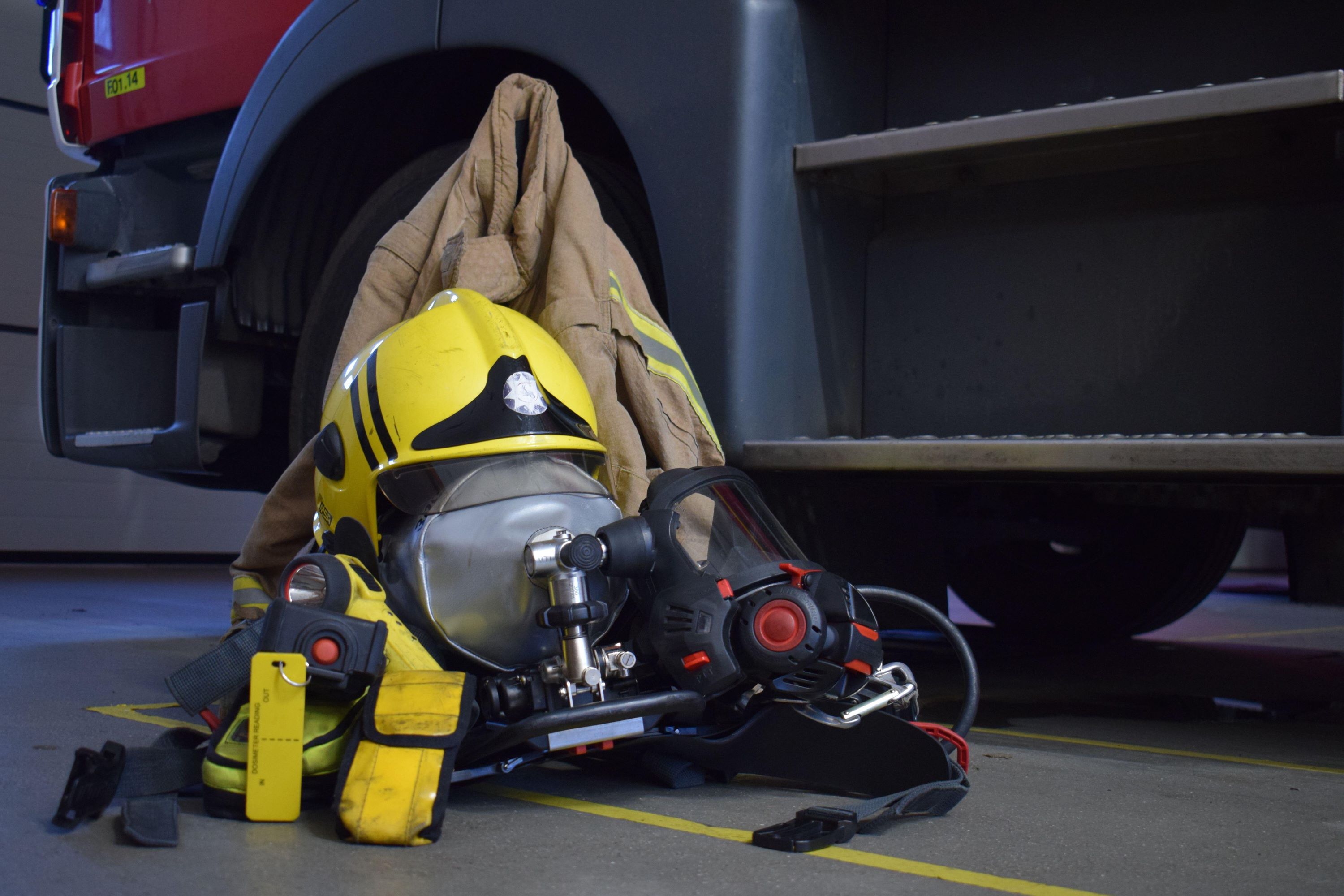
Firefighters face quadruple PFAS exposure risks - firefighting foam, in fires, fire sites and fire stations and both in and on their PPE
Even though PFAS levels may be very low, they could still be harmful. This is why the approach to monitoring firefighter exposures and health already advocated by the FBU is so important. We should also be asking questions about past regulatory failures to adequately assess firefighting foam hazards over six decades of use.
Firefighters have quadruple PFAS exposures with firefighting foam, in fires, fire sites and fire stations and PFAS both in and on their own PPE.
Downstream additional controls therefore have to be applied to reduce exposures with the best systems of work available, training, information, and the provision of ample, suitable and well tested PPE and work clothing properly stored, washed , cleaned and replaced. The FBU is already addressing these matters itself to protect members because rightly it does not assume governments or employers can be relied upon to do so based on their past records.
■ Shortly before we went to press, the French National Assembly passed a law strengthening regulations on PFAS. The UK remains a long way behind.
