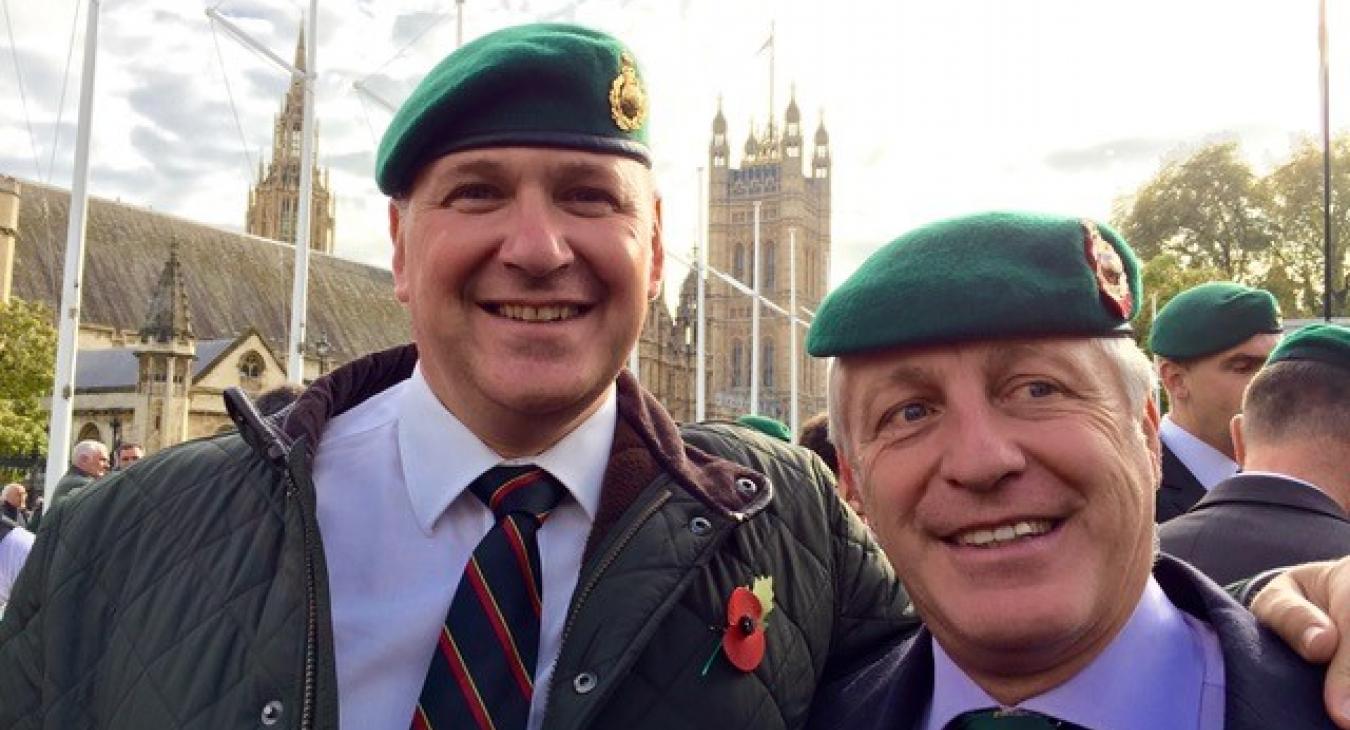
The ties that bind our armed forces and the fire service run deep and must be remembered, particularly at this time of year, writes Tam McFarlane.
Having joined the fire and rescue service direct from the armed forces, I am always struck at this time of year by the high profile role the fire service has in remembrance events across the UK. I know that many duty fire crews make it a point of principle to attend local ceremonies and stand with their communities as they remember.
This current connection follows a long history of close ties between the fire service and the armed forces. Since the Victorian period, firefighters were drawn from the ranks of ex-servicemen and women to fill posts. In fact, sailors from the Royal Navy used to be actively targeted by fire chiefs on the basis that they had 'learnt discipline' and were ‘accustomed to the mental and physical rigours of firefighting'.
Although much has changed within the service since that time, it is still true that a good proportion of firefighters come from a military background and as a consequence, so do many FBU reps. In the area where I am based, the South West, there are three ex Royal Marines and one ex-submariner on the FBU regional committee. Previously, we’ve had officials who have served in the Army, Royal Navy, Royal Air Force and Women’s Royal Navy Service. In recent years, many of us have found ourselves supporting and advising our members who have been called up as reservists to go to the conflicts in Iraq and Afghanistan.
The close links between the fire service, the military and the Fire Brigades Union stretch back over many years. The most famous example was the unique role played by the union during the liberation of Europe in the Second World War.
In 1944, following D-Day, the FBU took the uncharted step of being part of a decisive military operation across Nazi-occupied Europe. This involved firefighters in a unit called 'the Overseas Contingent’. This unit, or column as it was referred to, consisted of regular British firefighters who were attached to the allied invasion force after D-Day to protect vital stores and supplies from fire. After crossing the channel, they worked alongside the Army Fire Service in this vital task, moving across France, Belgium, Luxembourg and finally, into Germany itself.
Every single member of the contingent — from the commanding officer to the firefighters — were FBU members, and the Home Office, who paid the wages of the firefighters, deducted their FBU subscriptions at source. The commandant ensured they had facilities for union meetings and the FBU executive council even sent one of its members, John Forsyth, to travel abroad with the contingent.
In a letter home, he wrote: “It has been a great test of improvisation (sic) but the union organisation was kept very much alive and the members felt that their interests were being looked after both overseas and by head office at home. In some ways, it must have been a unique chapter in trade union history with units attached to the armed forces still having the benefit of trade union organisation".
This extraordinary story is just one high profile example among many of the close links and ties between firefighters, our service and the women and men who serve in our armed forces. These ties will be especially in our thoughts as we approach the remembrance time of year.