Proving the link between workplace hazards such as contaminants and illnesses such as cancer is notoriously difficult, as has been shown by hosts of workers who have been put at risk in the workplace over past decades. Steelworkers who developed respiratory disease as a direct result of tiny steel particles getting deep into their lungs waited so long for justice that many of them had died by the time their cases had been “won”.
There is now mounting evidence that firefighters are at a higher risk of carcinogens and other contaminants than the rest of the population. They are believed to be at increased risk of developing three types of cancer: testicular, prostate and non-Hodgkin lymphoma. The source is a 2006 study by the International Agency for Research on Cancer. Since its publication, fire services in the UK, USA and elsewhere have started to take the threat seriously.
But firefighters themselves need to know what the risks are and what they can do to protect themselves.
The International Association of Fire Fighters, which represents firefighters and emergency medical services workers in the USA and Canada, says that cancer is the leading cause of death among firefighters, at 63%.
Male firefighters are also 100 times more likely, says the IAFF, to suffer from certain cancers, including testicular, than other men.
Firefighters can be affected by contaminants present in fires and by-products, by diesel fumes, and by building materials, such as dust and asbestos.
They are protected when they are fighting an actual fire – it is when the fire is extinguished that the risks to their health can become serious.
IT IS WHEN THE FIRE IS EXTINGUISHED THAT RISKS TO HEALTH CAN BECOME SERIOUS
Firefighters will often leave dirty kit in the appliance, and not clean it before its next use, and this is when dangerous contaminants can seep into the skin.
Historically, there may have been reasons other than a bit of laxness with kit cleaning that prevented firefighters from taking care of themselves properly.
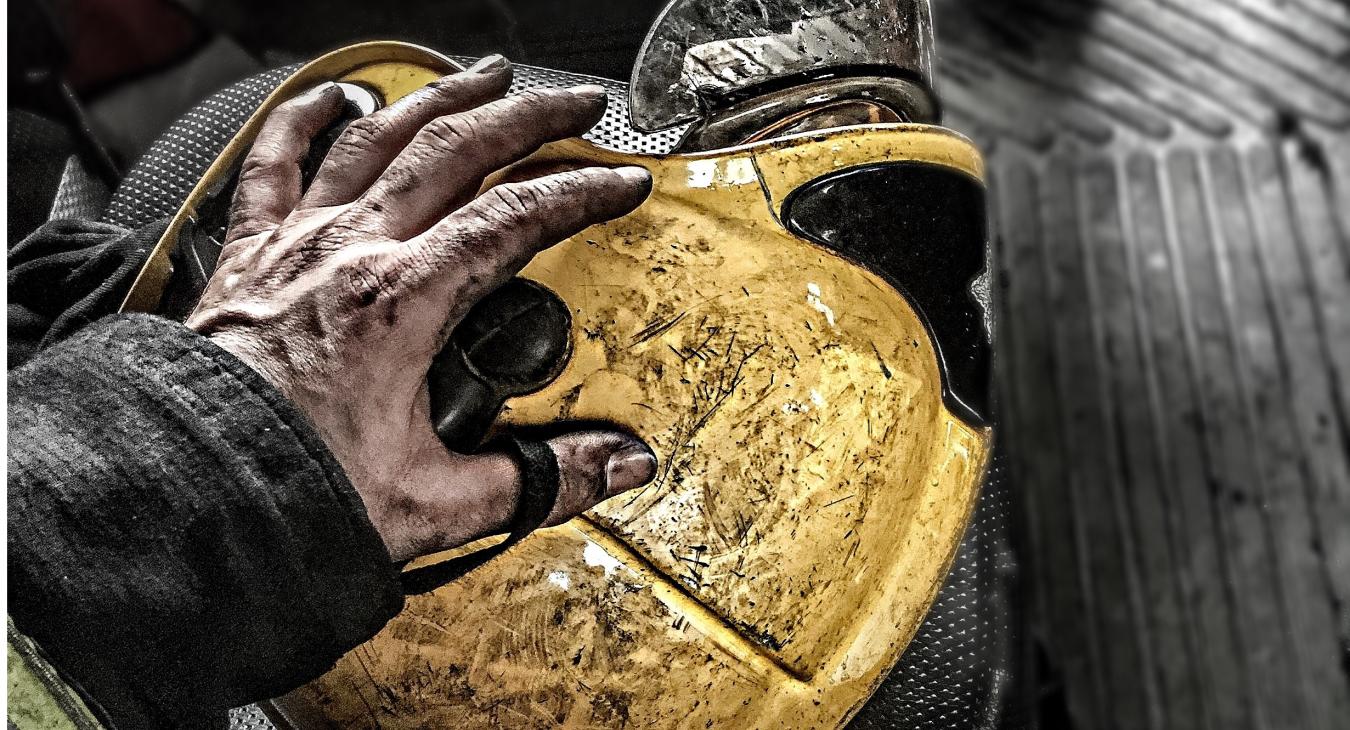
US firefighter Carter Jones told a journalist recently: “In May I'll have 50 years with the fire service, and for years it was almost a badge of honour that the dirtier your clothes, the dirtier your helmet, reflected that you were an aggressive firefighter.”
Thankfully, there is growing awareness of the risks posed by this outdated attitude – there’s nothing soft about protecting your health. Modern firefighters are now actively encouraged to ensure that their fire kits are kept clean between shouts, and to use common sense, for example, by not storing a newly cleaned kit near a contaminated PPE store.
The FBU has just published a new guide Dealing with Contaminants which contains a range of good advice about how to stay safe as well as things that reps should be pressing management for, including ensuring that all appliances are equipped with the resources firefighters need to clean themselves, such as wet wipes, disposable gloves, dust masks and hand washing facilities.
It also urges firefighters to take responsibility for their own fire kits, making sure they are clean, that they fit correctly, that kits are stored in clean air and not in the vicinity of diesel fumes.
Sadly, it is all too late for American “volunteer” firefighter Bucky Mock, 73, who was diagnosed with multiple myelomas in 2012. He had wondered since diagnosis if his cancer could have been work-related.
Then he got the confirmation he needed – the fire service he had worked for started putting tags inside all new fire kits urging firefighters to keep them clean at all times to protect themselves against cancer-causing contaminants.
He says it was then that he knew that it was his great love – fighting fires – that was the cause of his poor health.
He now spends what time he has left talking to groups of firefighters about prevention, so that no-one else is put at risk.
GUIDANCE
New FBU guidance encourages all reps to print and mount on the station wall a 10-step guide to working with contaminants along the following lines
- Always make sure your PPE is clean and stored in a clean environment. Always wear the right PPE for the incident
- Wear BA if you are concerned about the possibility of airborne products of combustion
- When damping down, wear full PPE and consider the use of a personal issue respirator
- Post incident and while still on scene, clean your PPE to remove as many products of combustion as possible
- Use wet-wipes as issued to remove soot etc. from head, neck, jaw, throat, underarms and hands immediately
- When cleaning dirty PPE and equipment, wear gloves, dust masks etc.
- Replace dirty fire kit on return to station and clean helmet, boots etc.
- Thoroughly clean the fire appliance interior, equipment and lockers after a fire
- Do not take dirty PPE home or store it in your vehicle
- If necessary after removal of PPE, consider the need to shower and change your clothes