
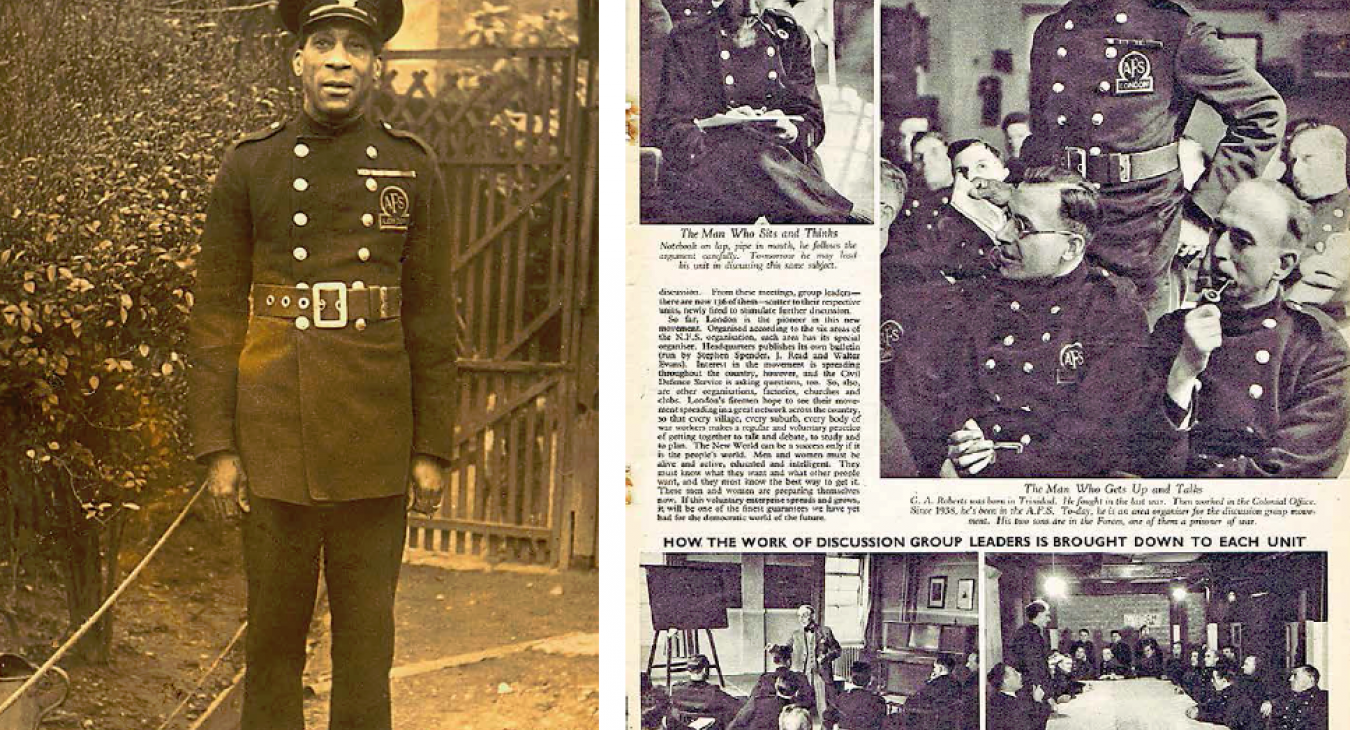
The man thought to have been Britain’s first black firefighter has been honoured, posthumously, with a blue plaque and a ceremony to commemorate his work throughout the blitz during the Second World War.
The plaque is now on the wall of the former South London home of George Arthur Roberts, who lived in the Camberwell house for more than 50 years. It was chosen by a popular vote organised by Southwark council.
“It was an absolutely amazing day,” says George’s great-granddaughter Samantha Harding. MPs, representatives from the fire service and members of the local community joined George’s descendants as they watched black and ethnic minority firefighters line up as a guard of honour as the plaque was unveiled.
“I was shocked by the number of people who came out for George,” says Samantha. “I made 40 programmes for the day thinking that would be more than enough. Literally, within minutes of arriving, we were all out of them.”
Like many firefighters, George came from a military background. Originally from Trinidad, he served in his country’s army before he voluntarily made the decision to fight for Britain when World War One started in 1914. As a member of the Middlesex Regiment, he saw action in France including the war’s bloodiest encounter, the Battle of the Somme, where over a million men were killed or injured. More than six feet tall, George was known for his deft hand at chucking back grenades that the enemy had thrown over.
BRITISH EMPIRE MEDAL
After the war, George settled down with his first wife Margaret in Camberwell and fathered two sons, Cyril and Victor, both of whom would go onto fight in World War Two. He then signed up to the national fire service and was posted to New Cross fire station in south east London.
Later he would be promoted to the rank of section leader and in 1944 was awarded the British Empire Medal, in part because of his firefighting duties, but also for his role in co-founding the fire service’s discussion and education groups.
These forums were attended by as many as 15,000 people each week who would go to their local fire stations to hear a range of speakers on various topics such as politics. The groups were designed to help combat the rise of fascism and the drift to war that had devastated much of Europe.
SPECTRE OF FASCISM
Sadly, George would recognise the eerily familiar spectre of fascism haunting the world today. From the rise of fascist parties across Europe – once marginal parties that are now attracting millions of votes – to the growing popularity of Donald Trump in the United States. Samantha is certain that if her great-grandfather were alive today he would be furiously organising against them.
George’s blue plaque unveiling comes just months after a statue of Crimean war nurse Mary Seacole was unveiled in the grounds of St Thomas’ Hospital, London. It is believed to be the first named statue of a black woman in the UK. Belatedly, black public service workers are being recognised for their contributions. Just 4% of blue plaques, however, honour ethnic minorities in London.
Michael Nicholas, national chair of the FBU’s black and ethnic minority members committee, said the life and work of George Arthur Roberts was a historic chapter of black history in the UK fire and rescue service.
“A decorated wartime hero, George Arthur Roberts is a powerful and positive legacy to all current black members of the military and fire service. We are proud to commemorate his achievements and humbled to have joined his family members at the ceremony. “Events like this enable a wider community knowledge of his commitment and bravery in service of his country. We follow very big footsteps,” he said.
Speaking on BBC radio’s Calling the West Indies in 1947, George said: “If what I am doing can assist in some small way to bring about a better understanding and a true fellowship amongst the peoples of the earth, I shall be extremely happy.” That’s quite a legacy.
