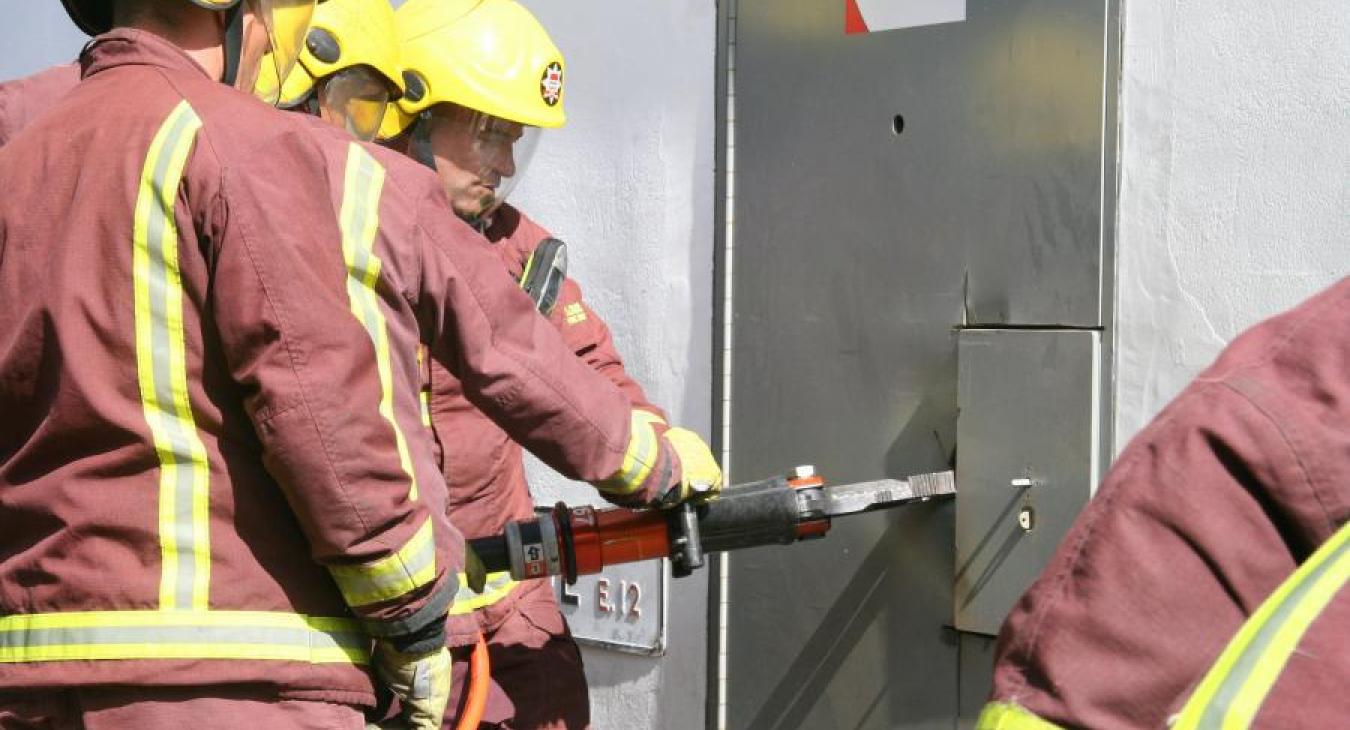
Yesterday was the second day of the Employment Appeal Tribunal in the age discrimination claims made by more than 6,000 firefighters regarding the introduction of the 2015 Firefighters’ Pension Scheme.
As our legal team anticipated, the key question was around what flexibility the Government has when applying provisions which treat older and younger employees differently, on the grounds that it is pursuing an aim which is based on political or social policy grounds.
European legislation gives the EU governments the right to frame legislation dealing with age discrimination on a basis that treats different age groups differently if there are legitimate social or labour market reasons for doing so (such as the need to free up employment or promotion opportunities). But our QC made the point that the Government must show that it had such a reason in mind and also that, looking at the facts of the particular case the Government was pursuing a legitimate aim, and that what it did was a proportionate way of doing so. The Government’s lawyers are hiding behind European law, saying that pursuing some sort of social policy is enough.
More than that, as our QC pointed out, if there is a social (or political) objective being pursued the Government has to say what it is, and has to show that what it did was a legitimate way of achieving it. The Government’s case is that it was pursuing a wider political goal of reducing pension costs across the public sector – but why does that mean you have to cut the benefits of younger members only? The Government’s answer to that is, as our QC pointed out, no answer at all. To say it is a ‘political’ decision begs the question: why? The Government has never answered that question – if there are limited resources, why spend them on members who are least affected by the reform process because they are going to retire in the near future anyway?
We also got into the question of what exactly the Government was trying to achieve. That has been a constantly moving target. It started off saying that younger members have more time to adjust to the new scheme. But if you look at that, older members have less need to adjust because they are least affected. The younger you are, the worse the consequences. A firefighter who has a week to go until reaching retirement age loses only a week of the better FPS benefits.
So the Government shifted its ground, not in the reform process but as a response to these legal proceedings. Now it says that the aim was to protect members who were closer to retirement because they had already made retirement plans – it says it has a moral duty to protect the expectations of older members, and the reform process was not about saving money. The answer to that is that it has a moral duty to protect the expectations of all members, not just older members, who signed up in the expectation that they would be able to retire at the age of 50 –55.
Having pointed out that the Government has never explained what it was trying to achieve, we then got into the question of proportionality. If the Government had a legitimate aim (and we say it didn’t), was its approach of introducing a transitional arrangement an ‘appropriate’ and ‘reasonably necessary’ way of achieving it (which is the legal test)? Here we have a difference between the judges’ case and ours. In the judges’ case, the Employment Tribunal correctly examined the question of balancing the Government’s perceived needs against the damage it was doing and concluded that the balance was unfair. In our case, the balancing exercise was not carried out at all. We will get into that in more detail on Wednesday.
We finished the day with the submissions of the QC who represents the ‘senior’ judges who are pursuing the claim. They are five High Court judges, and one judge who has just been promoted to the Court of Appeal. He made the point that judges are in a uniquely difficult position because they move into a different tax regime as a result of having to transfer, and they were made specific promises which have not been honoured. These are fair points, and place some clear water between our case and theirs. But they support everything we have to say how the law works in this area. They will finish off their case tomorrow.
What next?
As we reported, the Government’s case on day one came down to saying that it has a wide leeway in deciding what political or social policies it will apply. That starts to look a bit threadbare when you ask whether it actually looked at the consequences of what it was doing, and how it squares that with its obligations as an employer. It has no more right to discriminate, by legislation or otherwise, than any other employer.
Our judge is concerned that he is being asked to grapple with big political decisions taken at cabinet level. Our answer is that big political decisions must still be justified, in UK as well as European law, if the consequences are discriminatory. Legally that is undoubtedly right. But we must recognise that the decision he has to make has huge consequences, and he realises that too.
On Wednesday the Government gets a chance to explain why it thinks our legal analysis is wrong. Then we get into the specific defects of the decision made by the Employment Tribunal in our case (and which the judges’ Employment Tribunal got right). We will update you again after tomorrow.